

What we can help you clarify before you buy
Paid-ad visitors are usually deciding whether Thailand property is possible, legal, and worth pursuing. This is the first conversation we recommend having.
- Whether Sap Ing Sith, foreign-quota condo ownership, leasehold, or another route fits your situation
- Which Pattaya properties are realistic for your budget, usage plan, and risk tolerance
- What documents, title checks, and legal review should happen before deposit or transfer
Want more information?
Email us with your budget, preferred area, and whether you are considering Sap Ing Sith, a house, villa, or condo in Pattaya.
Send My InquiryIntroduction: Why Owning Property in Thailand Is Complicated for Foreigners
Thailand is one of the most desirable property markets in Southeast Asia — from the beachside villas of Phuket and Koh Samui to the sophisticated condominiums of Bangkok. Yet for foreigners, one fundamental law stands in the way: Thai nationals cannot transfer land ownership to non-Thai citizens.
Under Thailand's Land Code Act, foreigners are generally prohibited from owning land outright. This has historically pushed many expat buyers into legal grey zones — most notably, the "nominee company" structure. But with crackdowns intensifying and a modern, fully legal alternative now available, that era is drawing to a close.
That alternative is called Sap Ing Sith (ทรัพย์อิงสิทธิ) — and if you're a foreigner looking to invest in Thai real estate, you need to understand it.
What Is Sap Ing Sith (ทรัพย์อิงสิทธิ)?
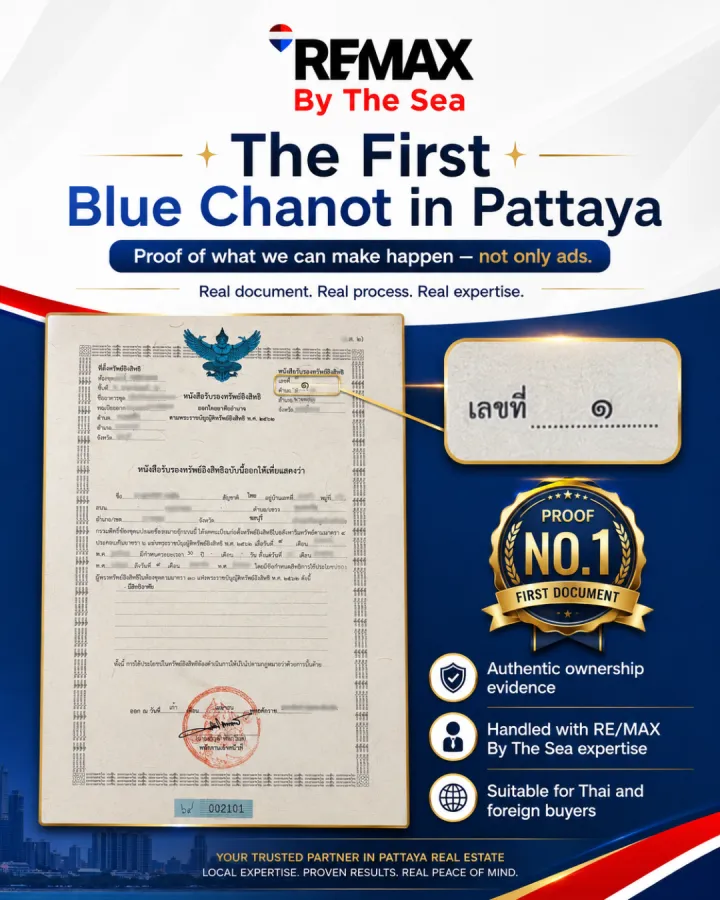
Sap Ing Sith translates loosely as a "Dependent Property Right" or "Registered Real Right." It was formally introduced under the Sap-Ing-Sith Act B.E. 2562 (2019), making it a modern legal instrument specifically designed to provide secure, long-term property usage rights for individuals — including foreigners.
The Core Concept
Think of Sap Ing Sith as something between ownership and a lease — but stronger and better protected than either in certain respects:
- You don't own the land (the Thai landowner retains the title)
- But you hold a real right — attached to the property itself, not just a personal contract
- That right is registered directly on the Chanote (Thailand's highest-grade title deed)
- It can be held for up to 30 years
Sap Ing Sith vs. Standard Lease
| Feature | Standard Lease | Sap Ing Sith |
|---|---|---|
| Legal Nature | Personal contract (in personam) | ✅ Real property right (in rem) |
| Registered on Chanote? | Sometimes | ✅ Always |
| Survives owner change? | Only if registered | ✅ Yes, automatically |
| Transferable to 3rd parties? | Requires landlord consent | ✅ No consent needed |
| Inheritable? | Depends on contract | ✅ Yes, by law |
| Can be mortgaged? | ❌ Generally no | ✅ Yes |
| Maximum term | 30 years (registered) | 30 years |
| Legal basis | Civil & Commercial Code | Sap-Ing-Sith Act B.E. 2562 (2019) |
What Property Types Qualify?
Sap Ing Sith can only be created over:
- Land with a full Chanote (โฉนดที่ดิน) title deed
- Buildings/structures on Chanote-titled land
- Condominium units registered under the Condominium Act
Land with lower-grade title documents (e.g., Nor Sor 3, Sor Por Kor) is not eligible. Always verify the title deed grade before proceeding.
The Nominee Company Trap: How It Works (and Why It's Illegal)

Before Sap Ing Sith became widely known, many foreigners turned to a workaround: setting up a Thai Limited Company (บริษัทจำกัด) to hold the land on their behalf — known as a "nominee structure."
How the Nominee Structure Works
- A Thai Limited Company is formed
- Thai nationals (nominees) hold at least 51% of shares
- The foreign buyer holds 49% and is appointed director
- The company purchases and holds the land title
- The foreigner controls the company — and by extension, the property
In practice, the Thai shareholders have zero real investment interest — they are simply "dummy" holders, often paid a small fee. This is illegal.
Legal Penalties for Nominee Structures
| Violation | Penalty |
|---|---|
| Criminal prosecution (nominees & foreigners) | Imprisonment up to 3 years |
| Corporate fines | 100,000 – 1,000,000 THB |
| Ongoing daily fines | 10,000 – 50,000 THB/day |
| Mandatory land disposal | Forced sale ordered by court |
| Company dissolution | Full shutdown by DBD/DSI |
5 Real Risks You're Taking
🔴 You Own Nothing Legally
Thai shareholders own everything. If they turn on you, you have almost no legal recourse.
🔴 No Grandfather Clause
Structures set up 10–20 years ago are being investigated today. Longevity provides zero protection.
🔴 Resort Area Crackdowns
Phuket, Koh Samui, Pattaya — exactly where most foreign buyers invest — are under the most intense scrutiny.
🔴 Title Can Be Cancelled
If found illegal, your land title can be cancelled and the property forced to be disposed of. You lose your investment.
🔴 AI-Powered Investigation
DSI and DBD now use AI tools to cross-reference shareholder finances, fund sources, and actual decision-making — Thai names on shares are not enough camouflage.
Why Sap Ing Sith Is the Superior Alternative
Sap Ing Sith was specifically designed to give foreign investors a legal, secure, and practical path to long-term property use in Thailand — without nominee risks or the limitations of traditional leases.
- ✅Fully Legal & Government-RecognizedYour right is registered at the Land Department and recorded on the Chanote. This is not a backdoor — it is the front door, with official government approval.
- ✅Survives Ownership ChangesIf the landowner sells the property or passes away, your Sap Ing Sith right remains in force for its full term. You cannot be evicted simply because the land changes hands.
- ✅Freely Transferable — Without PermissionUnlike a lease, you can transfer your Sap Ing Sith right to another person without needing the landowner's consent. Genuine flexibility if your circumstances change.
- ✅Inheritable by Your HeirsYour right passes to your heirs by law. Estate planning becomes significantly simpler compared to other structures.
- ✅Can Be MortgagedYou can use your Sap Ing Sith right as collateral for a bank loan — something a standard lease cannot do. This opens financing options previously unavailable to foreigners.
- ✅No Thai Shareholders — No Betrayal RiskThere are no Thai nominees involved. Your right is between you and the Land Department. There's no one who can "pull the rug" from under you.
- ✅Freedom to Improve the PropertySap Ing Sith holders have broader rights to renovate, develop, or improve the property compared to a standard leaseholder.
Important Things to Know Before You Sign
⏳ The 30-Year Maximum — No Automatic Renewal
The law strictly caps Sap Ing Sith at 30 years per registration. There is no statutory right to automatic renewal.
If any developer or agent promises you "30+30 years" or "automatic renewal," they are either misinformed or misleading you. A new term requires a completely new agreement and a fresh registration at the Land Office. It is not guaranteed.
📋 Only Chanote Land Qualifies
Not all land in Thailand has a Chanote deed. Lower-grade titles are not eligible. Title deed verification is non-negotiable.
🏗️ End-of-Term Provisions Must Be Defined
Section 11 risk to address before signing: if the Sap Ing Sith holder modifies, expands, or constructs buildings or structures on the land, those buildings or structures become the landowner’s property when the right ends, unless the parties agree otherwise. This rule does not apply to condominium units. The agreement must explicitly state the end-of-term treatment of every building and improvement; do not assume statutory compensation.
💰 Costs Overview in THB and USD
Use this as a planning estimate only. The USD comparison below uses an indicative rate of 1 USD ≈ 33.3 THB; banks, transfer services, and payment dates will vary.
| Cost Item | Approximate Amount (THB) | Approx. USD | Notes |
|---|---|---|---|
| Land Office registration fee | ~20,000 THB | ~$600 | Fee to establish/register the Sap Ing Sith right. |
| Sap Ing Sith certificate issuance | ~10,000 THB | ~$300 | Fee for the official หนังสือรับรองทรัพย์อิงสิทธิ. |
| Property duty / registration planning line | 2% of property value | Example: 100,000 THB ≈ $3,000 on 5M THB | Planning line based on the declared property value. Confirm the actual duty, tax, and registration treatment with the Land Office and lawyer. |
| Legal / lawyer estimate | ~100,000 THB | ~$3,000 | Practical estimate for agreement drafting, title review, and Land Office support. |
| Estimated total without 2% property duty line | ~130,000 THB | ~$3,900 | 20,000 + 10,000 + 100,000 THB. |
| Estimated total with 2% property duty line, using 5M THB example | ~230,000 THB | ~$6,900 | Adds 100,000 THB 2% property-duty / registration planning line to the example above. |
Research notes: Thai Land Department materials and legal summaries commonly cite 20,000 THB for establishing Sap Ing Sith and 10,000 THB for certificate issuance. The 2% property duty / registration line is a transparent planning assumption based on declared property value, not a substitute for transaction-specific Land Office, tax, or legal confirmation.
Why You Need a Professional Agent or Lawyer — Not Optional

Technically, the law does not require a lawyer. In practice, attempting Sap Ing Sith without professional guidance is a serious risk. Here's why:
1. Legal Document Drafting Is Critical
The agreement must be carefully drafted in Thai to clearly establish your rights as transferable and inheritable, define what happens to structures at term-end, and align precisely with what the local Land Office will accept. A poorly drafted agreement could result in an unenforceable or incomplete right.
2. Land Office Procedures Are Strict and Localized
Local Land Offices interpret regulations with some discretion. An experienced professional knows which documents are required, how to handle procedural differences across provinces, and can prevent rejections or delays.
3. Due Diligence on the Title Deed
A professional must verify that the land has a genuine Chanote title, that there are no liens or pending disputes, and that the landowner has legal authority to create the Sap Ing Sith. Title fraud is a known risk in some areas.
4. The Law Is New — Experience Is Rare
Because Sap Ing Sith was only introduced in 2019, many Land Offices — especially outside Bangkok — have processed relatively few of these registrations. An experienced agent or lawyer has navigated this before and knows how to handle unexpected hurdles.
Choose a legal professional who can demonstrate specific experience with Sap Ing Sith registrations — not just general property law. Ask for examples of previous registrations they have completed.
Documents Foreigners Should Prepare for Sap Ing Sith
Document requirements can vary by Land Office and by whether the buyer is an individual or company. Before appointment day, ask your lawyer to confirm the checklist with the local Land Office that controls the property area.
| Document | Who Prepares It | Why It Matters |
|---|---|---|
| Passport original and signed copies | Foreigner / right holder | Identity verification for Land Office registration. |
| Current visa or entry stamp copy | Foreigner / right holder | Shows lawful presence in Thailand at the time of signing. |
| Thai address and contact details | Foreigner / right holder | Used on forms, appointment records, and lawyer files. |
| Power of attorney, if not attending personally | Foreigner and lawyer | Allows a representative to sign or file documents where accepted. |
| Certified Thai translation of foreign documents, if requested | Foreigner / translator | Some Land Offices require Thai-language supporting documents. |
| Marriage certificate or spouse consent, if relevant | Foreigner / spouse | May be needed where marital property rules or funding source questions apply. |
| Evidence of payment or consideration | Foreigner / seller / lawyer | Supports fee, duty, and agreement calculations. |
| Draft Sap Ing Sith agreement in Thai | Lawyer | Defines the term, consideration, transferability, inheritance, improvements, and end-of-term handling. |
| Original Chanote and owner ID documents | Thai landowner / seller | Confirms the property is eligible and the owner can legally grant the right. |
| Land Office forms, including ท.ส.1 or ท.ส.2 as applicable | Lawyer / Land Office | Official application forms for land/building or condominium registrations. |
Setup a Thai Company vs. Sap Ing Sith
A Thai company can legally own land only when it is a genuine operating business with real Thai shareholders, capital, tax filings, and business purpose. It should not be used as a nominee wrapper for a foreigner to control land personally.
| Criteria | Thai Company Setup | Sap Ing Sith |
|---|---|---|
| Best fit | Real business operations, development, or investment company with genuine Thai participation | Foreign individual wants a registered long-term right over eligible property |
| Foreigner land ownership | Company owns land; foreigner does not personally own it | Thai owner keeps title; foreigner holds registered property right |
| Nominee risk | High if Thai shareholders are nominees | No nominee shareholders required |
| Ongoing compliance | Accounting, audit, tax filings, shareholder records, registered office, corporate governance | Mostly front-loaded registration and document work |
| Approximate upfront legal/admin cost | Often tens of thousands of THB, plus company capital and setup-specific advice | Example budget: ~130,000 THB (~$3,900) before the 2% property duty / registration planning line |
| Annual cost | Recurring accounting, audit, and compliance fees | Low once registered, subject to agreement terms and any later transfer/mortgage activity |
| Control structure | Through company director/shareholder rules | Direct registered right on Chanote/certificate |
| Transfer or exit | May require share transfer, land transfer, tax review, and corporate documents | Right can generally be transferred, subject to registration and applicable fees |
| Practical warning | Do not use a company only to disguise foreign ownership of land | Term is capped at 30 years with no automatic renewal |
Side-by-Side: Nominee Company vs. Sap Ing Sith
| Criteria | Nominee Company | Sap Ing Sith |
|---|---|---|
| Legal Status | ❌ Illegal | ✅ Fully Legal |
| Government Risk | 🔴 HIGH — active crackdowns | 🟢 NONE |
| Criminal Liability | Yes — up to 3 years prison | None |
| Actual Control | Indirect — via Thai shareholders | Direct — your right is on the Chanote |
| Betrayal Risk | HIGH | NONE |
| Transferable? | Requires share transfer (complex) | ✅ Yes, freely |
| Inheritable? | Depends on shares/will | ✅ Yes, by law |
| Mortgageable? | Indirectly only | ✅ Yes, directly |
| Annual Cost | Accounting, audits, company maintenance | Low — one-time registration fee |
| Complexity | HIGH — ongoing compliance burden | LOW — clean once registered |
| Survives owner change? | Depends on company structure | ✅ Yes, by law |
Step-by-Step Registration Process
Find Eligible PropertyConfirm the land has a full Chanote (โฉนดที่ดิน) title deed. Lower-grade titles do not qualify.
Engage a Qualified ProfessionalSelect a lawyer or agent with demonstrable Sap Ing Sith experience in the region where your property is located.
Conduct Due DiligenceYour lawyer verifies the title, checks for liens or encumbrances, confirms the landowner's legal authority, and investigates for any title disputes.
Draft the AgreementA written agreement is prepared in Thai, clearly defining parties, property (Chanote number), term, consideration, transferability, inheritance, and end-of-term provisions.
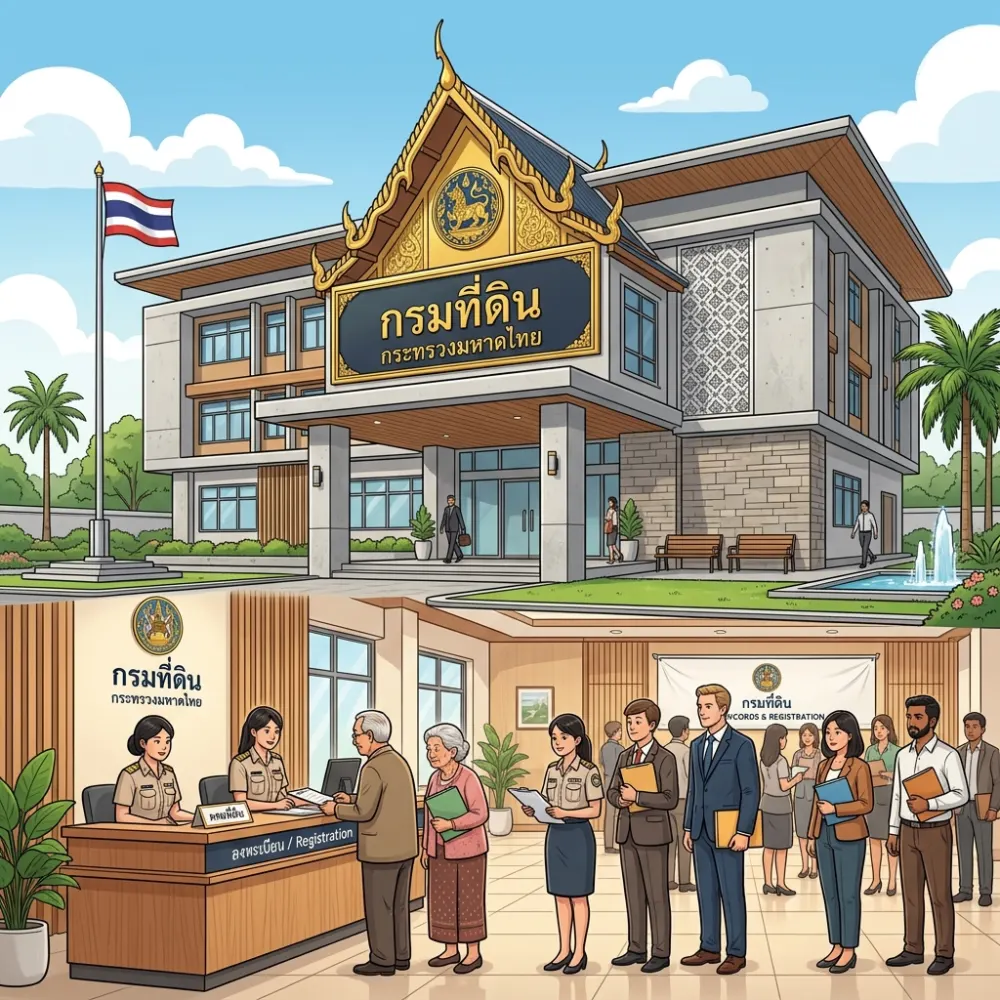
Both Parties Appear at the Land OfficeYou and the landowner must both be physically present at the local Land Office responsible for the property's area.
Submit Required DocumentsOriginal Chanote, proof of identity for both parties, corporate affidavits (if applicable), and official Land Office forms (แบบ ท.ส.1 for land/buildings, แบบ ท.ส.2 for condos).
Pay Applicable FeesRegistration fee (~20,000 THB / ~$600), certificate issuance (~10,000 THB / ~$300), lawyer estimate (~100,000 THB / ~$3,000), and the 2% property duty / registration planning line where applicable.
Receive Your Sap Ing Sith CertificateThe Land Office issues your official หนังสือรับรองทรัพย์อิงสิทธิ (Sap Ing Sith Certificate) — your evidence of the right.
Right Is Recorded on the ChanoteYour Sap Ing Sith is now registered on the title deed and fully enforceable, even if the land is sold.
📋 Quick Reference: Key Facts About Sap Ing Sith
| Law | Sap-Ing-Sith Act B.E. 2562 (2019) |
| Thai name | ทรัพย์อิงสิทธิ |
| Maximum term | 30 years |
| Renewal | Not automatic — new agreement required |
| Eligible titles | Chanote (โฉนดที่ดิน) only |
| Registration location | Local Land Office (กรมที่ดิน) |
| Certificate issued | หนังสือรับรองทรัพย์อิงสิทธิ |
| Transferable | Yes — without landowner's consent |
| Inheritable | Yes — by law |
| Mortgageable | Yes |
| Est. registration fee | ~20,000 THB |
| Est. certificate fee | ~10,000 THB (~$300) |
| Est. lawyer budget | ~100,000 THB (~$3,000) |
| Property duty / registration planning line | 2% of declared property value; confirm actual duty, tax, and registration treatment with the Land Office and lawyer |
| USD comparison rate used | Approx. 1 USD = 33.3 THB |
| Example total, without 2% property duty line | ~130,000 THB (~$3,900) |
| Example total, with 2% property duty line | ~230,000 THB (~$6,900) using a 5M THB property example |



Ready to Discuss Sap Ing Sith or Pattaya Property?
Tell us what you want to buy, your budget, and your timeline. We will help you understand suitable property options and the legal questions to review before moving forward.
Email RE/MAX By The Sea →