
Thailand property guide for foreign buyers
Freehold vs Leasehold vs Sap Ing Sith in Thailand
The three legal structures foreign buyers should compare before buying a condo, house, or villa in Thailand.
Quick answer: Foreigners can usually own an eligible condominium unit freehold within the foreign quota. For land, houses, and villas, a registered leasehold or Sap Ing Sith may be more relevant. The best route depends on the property, your timeline, title status, and the exact rights written and registered—not on a promise of “risk-free” ownership.
Start with the property type—not the sales pitch
Thailand generally restricts foreign ownership of land. That is why the first question is whether you are buying a condominium unit, or a house or villa sitting on land. A foreign buyer may be able to own an eligible condo unit freehold if the building has space within its foreign ownership quota. Owning the land beneath a house is a different issue.
Freehold
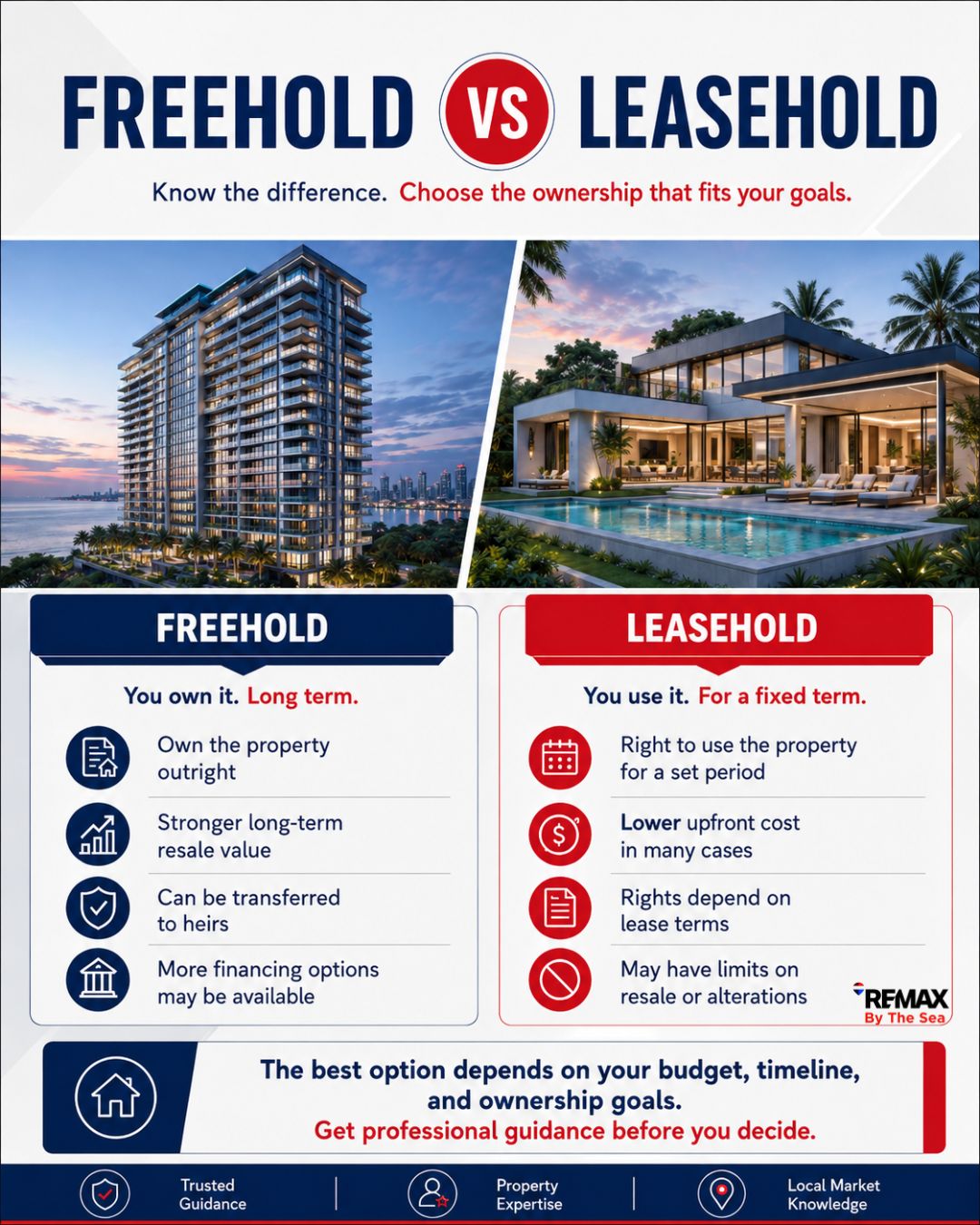
Outright ownership of an eligible condo unit, registered in the buyer’s name. It is not a general foreign-land ownership route.
Contractual routeLeasehold
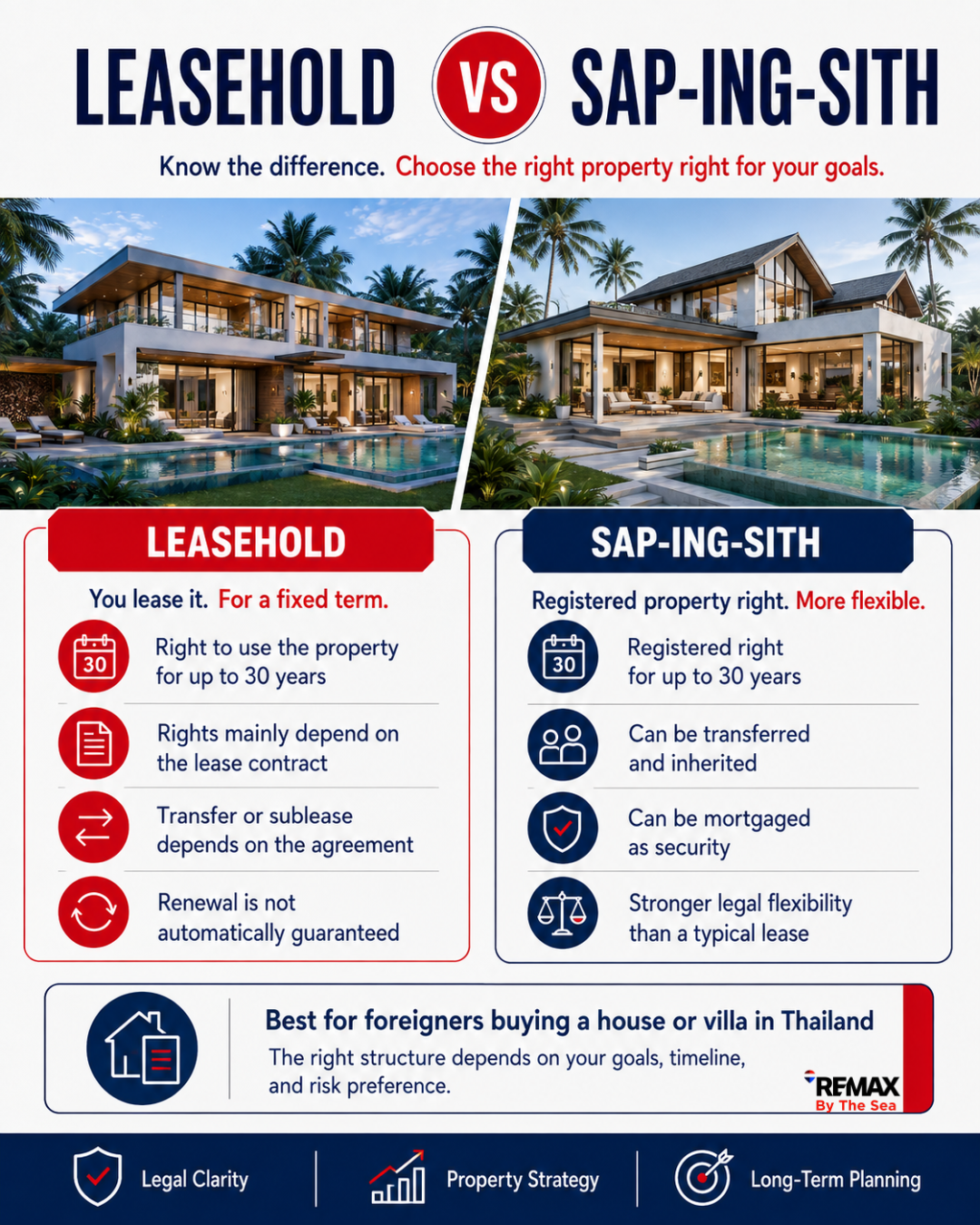
A right to use property for an agreed term. The agreement and registration details matter greatly.
Registered real rightSap Ing Sith
A registered property right over eligible Chanote-titled property for up to 30 years, with characteristics set by the Sap-Ing-Sith Act.
Freehold vs leasehold vs Sap Ing Sith: at a glance
| Question | Freehold condo | Registered leasehold | Sap Ing Sith |
|---|---|---|---|
| What does the foreign buyer hold? | Ownership of an eligible condominium unit. | A lease right under the agreement for a fixed term. | A registered real right over eligible property. |
| Typical foreign-buyer use | Condo within available foreign quota. | House, villa, land-related use, or condo when leasehold is offered. | Eligible Chanote-titled land/buildings or registered condo units. |
| Term | Not a fixed lease term. | Up to 30 years for a registered lease; any future renewal needs careful legal review and is not automatic. | Up to 30 years; a new agreement and registration are needed for any later term. |
| Transfer / inheritance | Subject to condo law, registration, and usual transfer rules. | Depends heavily on the registered lease and contract terms. | Generally transferable and inheritable under the statutory framework, subject to registration and transaction requirements. |
| Key check | Foreign quota, title, juristic office records, funds remittance, and building rules. | Term, registration, transfer/sublease rights, renewal language, owner authority, and end-of-term treatment. | Chanote eligibility, Land Office registration, agreement scope, existing encumbrances, and end-of-term treatment. |
1. Freehold: strongest fit for an eligible foreign-quota condo
“Freehold” is often the clearest route when a foreigner is buying a condominium unit and the building has foreign quota available. The buyer owns the unit itself, while common property is shared through the condominium structure. It does not mean a foreigner can freely buy land or a detached house with land in their personal name.
Before relying on a freehold claim, ask the juristic office and lawyer to confirm the quota position, title, seller authority, outstanding building obligations, and the foreign-currency remittance documentation required for registration.
2. Leasehold: useful, but the document is the product
A leasehold can be a practical way to secure long-term use of a house, villa, or condo. For leases exceeding three years, registration at the Land Office is usually crucial to enforce the full term against third parties. A lease is not automatically a substitute for ownership: its protections come from the contract, the registration, and the parties’ ability to perform.
Watch for vague renewal promises. Marketing language such as “30 + 30” does not create a guaranteed future term. Have a qualified Thai lawyer explain exactly what is registered today, what is only a future intention, and what happens to improvements at the end of the term.3. Sap Ing Sith: a registered alternative for eligible property
Sap Ing Sith (ทรัพย์อิงสิทธิ) was introduced in 2019 as a registered real property right. It can be created over eligible Chanote-titled land, buildings, and condominium units for up to 30 years. Unlike a standard personal lease, it is designed as a right attached to the property and is registered through the Land Office.
That does not eliminate the need for diligence. Confirm the title grade, the landowner’s authority, existing mortgages or encumbrances, the local Land Office process, the agreement’s permitted use and improvements, and the end-of-term outcome. See our Sap Ing Sith FAQ for concise answers on transfer, inheritance, collateral, and foreign land ownership.
Which structure may fit your plan?
- You want a condo and foreign quota is available: investigate foreign freehold first.
- You want to use a house or villa for a defined period: compare a properly registered leasehold with Sap Ing Sith, then assess the specific title and agreement.
- You care about transferability or inheritance: ask a lawyer to compare the actual registered rights, not just the brochure headline.
- You are buying for investment or resale: consider the future buyer pool, remaining term, transfer process, building rules, and liquidity.
Five checks before paying a reservation fee
- Identify the title and property type. Check whether it is a registered condominium unit or land/building, and whether the title supports the proposed structure.
- Verify the seller’s authority and encumbrances. Do not rely only on a copy of a title deed.
- Read the registered document and the sale agreement together. Make sure terms on transfer, inheritance, permitted use, improvements, and exit are clear.
- Confirm every “future” promise. Renewal, rental return, financing, or approval claims should be independently checked.
- Use independent Thai legal advice. A local agent can help compare options and property fit; a qualified lawyer should advise on the legal structure and documents.
Compare the right property structure before you commit
Tell RE/MAX By The Sea whether you are considering a condo, house, or villa in Pattaya, your budget, and your intended timeline. We can help you shortlist suitable options and prepare the questions to take to your legal adviser.
Ask a Pattaya property advisorLegal disclaimer: This guide is general information, not legal or tax advice. Thai property rules, Land Office procedures, condominium quota, title status, and agreement terms must be verified for the specific transaction. Consult a qualified Thai property lawyer before reserving, signing, or transferring funds.